



Risks of Digital Transformation and technological investments
"The first rule of any technology used in a business is that automation applied to an efficient operation will magnify the efficiency. The second is...

By Role
By Industry
By Target Customer
What We Offer
We drive business growth by improving operational efficiency through process optimization, smart automation, and cost control. Our approach boosts productivity, reduces expenses, and increases profitability with scalable, sustainable solutions
Customer Experience
We design memorable, customer-centered experiences that drive loyalty, enhance support, and optimize every stage of the journey. From maturity frameworks and experience maps to loyalty programs, service design, and feedback analysis, we help brands deeply connect with users and grow sustainably.
Marketing & Sales
We drive marketing and sales strategies that combine technology, creativity, and analytics to accelerate growth. From value proposition design and AI-driven automation to inbound, ABM, and sales enablement strategies, we help businesses attract, convert, and retain customers effectively and profitably.
Pricing & Revenue
We optimize pricing and revenue through data-driven strategies and integrated planning. From profitability modeling and margin analysis to demand management and sales forecasting, we help maximize financial performance and business competitiveness.
Digital Transformation
We accelerate digital transformation by aligning strategy, processes and technology. From operating model definition and intelligent automation to CRM implementation, artificial intelligence and digital channels, we help organizations adapt, scale and lead in changing and competitive environments.
Operational Efficiency
We enhance operational efficiency through process optimization, intelligent automation, and cost control. From cost reduction strategies and process redesign to RPA and value analysis, we help businesses boost productivity, agility, and sustainable profitability.
Customer Experience
Marketing & Sales
Pricing & Revenue
Digital Transformation
Operational Efficiency
The digital transformation maturityassessment is that crucial step toward crafting a future where your businessdoesn't just survive but thrives amid constant change. As a consulting partnerat ICX, I've seen firsthand how this framework empowers organizations toevaluate their digital readiness with precision and purpose. It's not justabout adopting new tech; it's about weaving it seamlessly into every facet ofyour operations, culture, and strategy to drive real growth. In this piece,we'll dive deep into what makes a Digital Transformation Maturity Model (DTMM) indispensable for boards and C-suite leaders like you, exploring its stages, dimensions, and practical implementation while tying in powerful tools like the Prosci ADKAR Model for change management.
Let's start by unpacking theessence of a DTMM. At its core, it's a structured framework that helps organizations gauge how well digital technologies are embedded in their daily workings. This isn't a one-size-fits-all checklist—far from it. It takes a holisticview, examining technology adoption alongside people, processes, data, andmore. For executives steering large enterprises, this means identifying whereyour company stands on the maturity spectrum, spotting gaps that could hinder progress, and charting a clear path forward. Think of it as a diagnostic toolthat reveals whether your digital efforts are fragmented or fully integrated,ultimately guiding investments that deliver tangible results like boosted revenue, enhanced customer loyalty, and operational excellence.
Why bother with a digital transformation maturity assessment? Well, in my experience at ICX, companies that embrace these models gain a competitive edge by self-assessing theirdigital readiness without always needing outside help right away. You can gatheryour team for honest discussions to pinpoint strengths and areas needing attention. It also lets you benchmark against industry peers, high lighting where you excel or lag. This insight is gold for strategy development, helping prioritize initiatives like ramping up data analytics or nurturing a culture that's agile and innovative. And crucially, it provides metrics to track progress over time, ensuring your digital pushes align with core business aimssuch as efficiency gains, fresh innovations, and deeper customer satisfaction. Skip this, and you risk scattered efforts that drain resources without movingthe needle.
Common stages in these models painta vivid picture of progression. Most outline a journey from basic beginnings tosophisticated optimization, often in five levels. To make this clearer,consider this table summarizing the stages:
>> Benefits of an Aligned TOM in the Digital Age and OTAs in Hospitality <<
|
Stage |
Description |
Key Characteristics |
|
Initial/Nascent |
Basic or ad-hoc digital adoption with limited strategy. |
Siloed tech use, reactive approaches, low integration; focus on survival rather than innovation. |
|
Emerging/Repeatable |
Initial processes established, but inconsistent. |
Some digital tools implemented, basic governance; early experimentation with data and automation. |
|
Defined/Connected |
Standardized digital practices across departments. |
Integrated systems, clear strategy; emphasis on collaboration and customer experience. |
|
Managed |
Proactive management with metrics and optimization. |
Data-driven decisions, agile processes; digital culture embedded organization-wide. |
|
Optimized/Multi-Moment |
Fully mature, innovative, and adaptive. |
Continuous improvement, AI/ML integration; business models evolve dynamically with technology. |
These stages aren't rigid; they adapt to your industry, but they consistently build on each other, incorporating elements of change management to ease the transition.
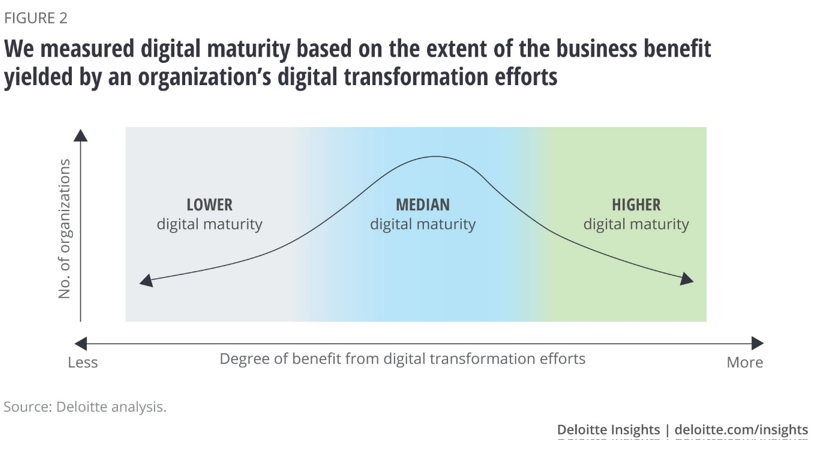
Visualizing this helps tremendously—take a look at this diagram adapted from various sources, showingthe upward trajectory from nascent to optimized states.
Key dimensions in a DTMM cover thefull spectrum of your organization. Strategy comes first: how well do yourdigital goals mesh with overall business objectives? Then there's culture, where employee mindsets and adaptability play a starring role. Organization looks at structure, leadership, and talent pools geared toward digital success. Processes delve into workflow efficiency and automation opportunities.Technology assesses adoption of cutting-edge tools like AI, cloud computing, and IoT. Data focuses on analytics, actionable insights, and robust security. And customer focus ensures digital channels elevate experiences, turning satisfied users into loyal advocates. For specialized sectors, models like the OECD's emphasize areas such as seamless government interactions, which you can explore further on their official site at oecd.org for validated insights into public sector applications.
Popular models offer tailoredapproaches. The Prosci DTMM stands out by weaving in people-centric change viaits ADKAR framework, progressing through five stages that mirror individual adaptation. Deloitte's model highlights "digital pivots" forflexibility and data mastery, directly tying maturity to bottom-line benefits.McKinsey's Digital Quotient measures across strategy, capabilities,organization, and culture, from nascent to multi-moment excellence. TM Forumcaters to telecom with KPIs on customer experience and operations. OECD'sversion suits public entities with self-assessments for benchmarking. Capgeminiand IDC provide holistic views, from ad-hoc beginners to optimized transformers. Picking one depends on your field—McKinsey for broad strategy, perhaps, or TM Forum for telecom specifics.
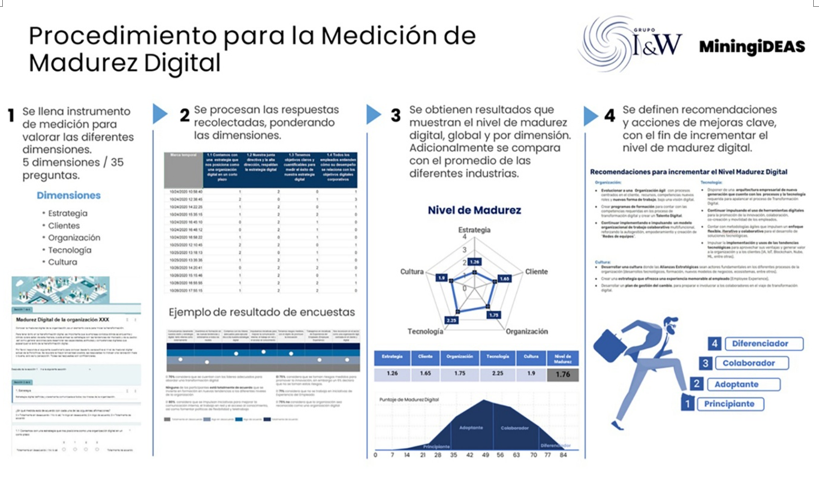
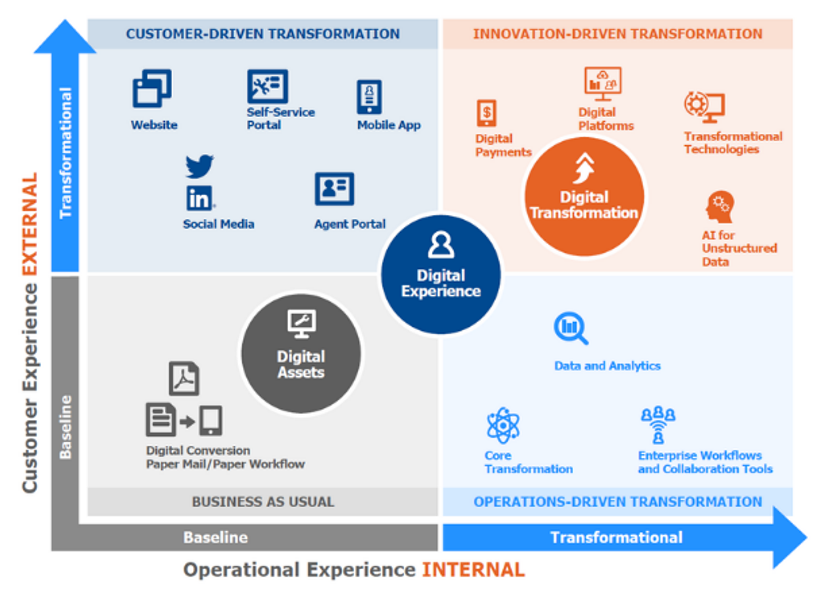
Here's another illustrative diagramfrom industry discussions, depicting how stages interconnect for a smoothertransformation journey.
Implementing a DTMM starts with selection: match it to your sector's needs, like opting for Deloitte inenterprise settings. Next, rally cross-functional teams for a candidself-assessment, scoring each dimension. Analyze the gaps revealed—maybe processes are lagging—and prioritize fixes. Craft a roadmap with milestones, resources, and integrations like workflow automation tools. Finally, monitorwith regular reassessments to iterate and refine. Remember, this is an ongoingpath, not a finish line.
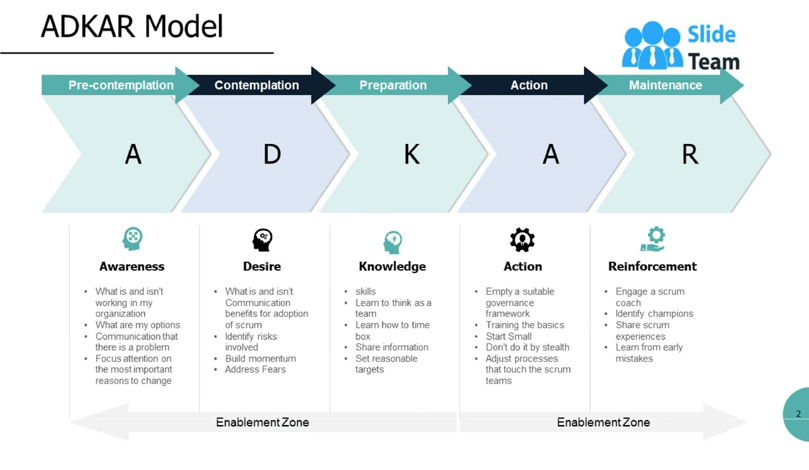
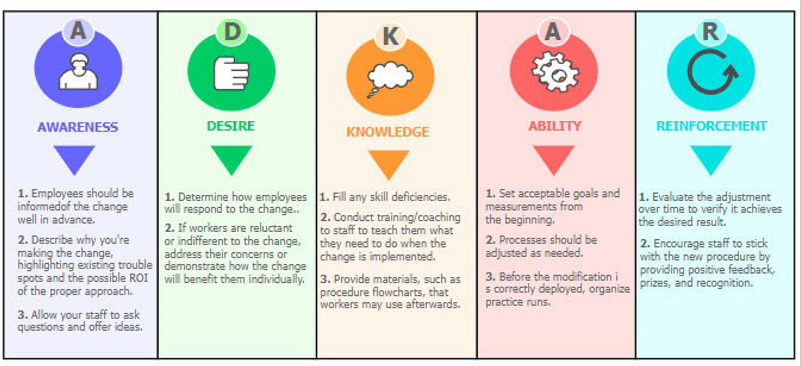
Shifting gears a bit, let's connectthis to the Prosci ADKAR Model, which complements DTMMs beautifully by addressing the human element. ADKAR—Awareness, Desire, Knowledge, Ability, Reinforcement—is all about guiding individuals through change, recognizing that organizational shifts succeed only when people buy in. Developed by JeffHiatt from patterns in hundreds of organizations, it's a straightforwardyet powerful tool used worldwide.
See this diagram for a clear viewof ADKAR's structure.
>> What is RPA and what is it used for? <<
Breaking it down: Awareness builds understanding of why change is needed, countering misinformation. Desire sparks motivation by answering personal benefits. Knowledge delivers the how-tothrough training. Ability turns that into practice with hands-on support. Reinforcement locks it in with recognition and audits to prevent backsliding. It's sequential—miss one, and resistance mounts.
ADKAR integrates with larger strategies, like Prosci's 3-Phase Process, focusing on managing change in themiddle phase. Tools like the ADKAR Blueprint help anticipate barriers andtailor plans. It's flexible for any project style, with status checks keeping things on track.
Real-world applications shine through case studies. Microsoft used ADKAR for customer success in adopting Microsoft 365, boosting adoption via targeted exercises and research-backed motivations, leading to stronger partnerships and renewals. United Concordia Dental achieved 75% AI tool activation by addressing each element, enhancing efficiency in healthcare. OTIP in insurance hit high ADKAR scores, equipping employees and establishing a Change Management Office for sustained success. A Chinese university cut reject rates in education processes using ADKAR as achecklist, improving quality through clear communication. A tech firm smoothly rolled out a performance system with town halls, gamification, and ongoing support, aligning goals and reducing resistance.
These stories highlight ADKAR'sversatility, from tech to education, often yielding higher engagement and measurable gains like sales boosts or cost savings.
Benefits abound: higher successrates by minimizing resistance, precise interventions for barriers, scalabilityacross changes, sustained results through reinforcement, and boosted engagementfor positive experiences.
Now, as we think about applyingthis in your context, consider establishing a Digital Transformation Office(DTO) to orchestrate it all. This centralized hub, led by a Chief Transformation Officer and backed by diverse teams, aligns tech with business strategy, promotes continuous improvement, and harnesses innovations forgrowth. It's about making transformation a team effort—why not kickstart yourstoday? Reach out to ICX for guidance on setting up a DTO that unlocks your potential.
Diving deeper into the TargetOperating Model (TOM), it's essentially a blueprint for how your organizationdelivers value in a digitally mature state. It outlines core functionalitieslike streamlined processes, empowered teams, and efficient management ofcritical tasks to gear up for success. A strong TOM enhances decision-making,optimizes resource allocation, and automates routine work, rendering operationsmore agile. For instance, it addresses key dimensions assessed in DTMMs,uncovering hidden bottlenecks through techniques like Process Mining. Thisdata-driven approach reveals disconnects between technological systems andactual information flows, which can stifle efficiency if ignored.
In the corporate world, suchdisconnects have led to stalled projects, wasted investments, and lost opportunities. Companies clinging to outdated workflows often see competitorssurge ahead with seamless integrations. But with informed decisions at the boardand C-suite level, you can flip this—leveraging digital transformation maturityassessment to spot issues early, migrate to efficient tools like automated CRM flows, Low Code apps, RPA (Robotic Process Automation), or AI agents. Thisshift not only streamlines operations but fuels growth by freeing teams forstrategic work.
Take Process Mining: it maps realbehaviors against ideal processes, highlighting variances that drag down performance. Migrating bottlenecks to lighter tools—say, automating invoiceapprovals in CRM or building custom apps with Low Code—can cut processing times dramatically. I've witnessed clients at ICX reduce cycle times by 40% throughsuch moves, directly impacting profitability.
The impact on growth is profound.Knowledgeable executives using digital transformation maturity assessment drivebetter resource allocation, fostering innovation and customer-centricity.Boards that prioritize this see revenue uplifts from optimized pricing,retained loyalty via superior experiences, and efficiency gains that boostmargins. It's about turning data into decisions that propel the companyforward.
At ICX, we ensure success byblending proven methodologies like Prosci with world-class AI-powered ProcessOptimization tools and frameworks such as APQC's Process ClassificationFramework. Our customer-centric approach tailors paths in Pricing & Revenue, Customer Experience, Marketing & Sales, Digital Transformation, and Operational Efficiency. Powered by Efficiency, Optimization, Automation, and Measurement, we deliver outcomes like attracting new customers, convertingopportunities, and enhancing service. Our expertise in DTMM, TOM development, Process Mapping, Mining, Optimizing, and Workflow Automation positions us asyour partner for sustained growth.
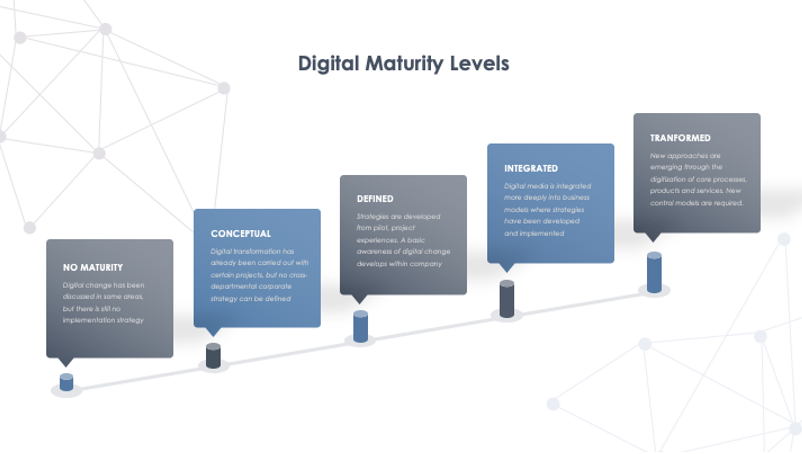
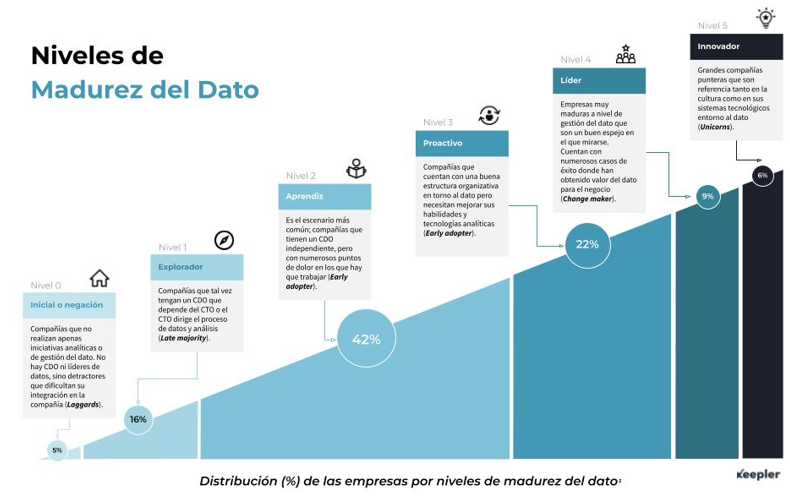
To give you a better sense, here'sa diagram outlining digital maturity stages.
To wrap up, remember that embracing a digital maturity model is not optional in a technology‑driven era: it’s essential if you want to remain competitive, relevant, and profitable. It’s not just about “having digital projects,” but about having a clear framework that allows you to prioritize investments, orchestrate initiatives across functions, measure impact, and correct course before risks materialize. A well‑implemented maturity model equips you to navigate complexity with confidence, manage interdependencies between technology, processes, and people, and ensure that your organization evolves dynamically instead of reacting in a tactical, fragmented way.
In practice, this means making data‑driven decisions about what to automate, what to redesign, and what to abandon; identifying critical capabilities you need to build in leadership, talent, and technology architecture; and building a roadmap that connects your strategic vision with concrete initiatives that generate visible results in P&L, customer experience, and operational efficiency. For a CEO, CFO, or board member, having this level of clarity is the difference between “doing transformation” and truly transforming the business model.
Ready to raise your digital game and move from isolated initiatives to a coherent, governed transformation agenda? Contact ICX today to explore how a customized digital transformation maturity assessment can reshape your strategy, prioritize your technology investments with a business‑first lens, and ignite unprecedented growth. We can help you translate the findings of the maturity model into a concrete design for your Digital Transformation Office (DTO) and your Target Operating Model (TOM), connecting roles, processes, KPIs, automation, and technology in a single actionable map.
Let’s talk about how to build your DTO and TOM for lasting success: a more agile, efficient, and customer‑centric organization, ready to capture new revenue streams, protect margins, and respond quickly to market shifts.
"The first rule of any technology used in a business is that automation applied to an efficient operation will magnify the efficiency. The second is...

“As Dr. Michael Grieves, the pioneer who introduced the digital twin concept, aptly put it, ‘The digital twin is the convergence of the physical and...
"Process mining is the key to unlocking true operational insights in an era where assumptions can derail even the most ambitious strategies." –...