




/ICX_Insights%20content/Folder%20icon%20for%20insights.svg)
/ICX_Insights%20content/Folder%20celeste.svg)
/ICX_Insights%20content/Print%20gris.svg)
/ICX_Insights%20content/Print%20celeste.svg)
/ICX_Insights%20content/Share%20icon.svg)
/ICX_Insights%20content/Share%20celeste.svg)
/ICX_Insights%20content/Subscribe%20icon.svg)
/ICX_Insights%20content/Subscribe%20celeste.svg)
/ICX_Insights%20content/Start%20Here%20icon.svg)
/ICX_Insights%20content/Start%20here%20celeste.svg)
What is Service Blueprint and why use it to improve CX?
 Aileen Pierce : May 29, 2025
Do you want to generate an extraordinary customer experience? Do you want to design a service that satisfies consumers?
7 min read
7 min read
Think about the last time you had a really good experience: what did it feel like, why did it feel good, what stuck in your memory, what did it feel like, what did it feel like, why did it feel good, what did it feel like, what stuck in your memory?
Now I'd like you to think about the last time you had a bad experience: what didn't you like and why? How did it make you feel at the time? What do you feel when you remember that experience?
It is crucial for companies to know what kind of experiences their customers are having and remembering with their brands, as a satisfied customer who has had an excellent experience will most likely tell their friends and family about your brand, your product or service, which could translate into more revenue and business for your company.
The best advertising is not the advertising that a brand creates and develops for its products. The best advertising is what satisfied customers do to a brand when they talk about it, when they mention the name of your brand and get a huge smile on their face, when they get a huge thrill when they talk about what they experienced when they used your product/service or visited your shop.
"They may forget what they were told, but they will never forget what they were made to feel". Maya Angelou.
It is extremely important for brands to start taking Customer Experience (CX) into account, as it will not only make customers feel good by generating satisfaction and happiness, but it also means more business and revenue for the company.
Most companies lack real visibility into their customer journey.


We know that Customer Experience is vital for the continuity of any business. Good or bad, the experience that customers have had with our brand will predict their future purchasing behaviour: will they continue to buy from us or will they go to the competition. But what is Customer Experience (CX)?
It is the set of feelings and perceptions that your customers have about your company or brand. In the end, this set of feelings and perceptions of your customers translates into an experience, which customers will remember and spread.
To have a successful Customer Experience, we need to meet and exceed all the expectations that our customers have of our brand, regardless of the channel (social media, web, mobile, point of sale) and regardless of the commercial process that is being executed.
CX is to understand that, in every interaction that the customer has with us, we must create an experience with which our customer is satisfied, feels happy and has a good perception of our brand.
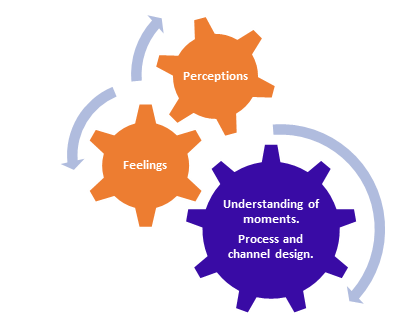
But where do these customer feelings and perceptions come from, who triggers them? The answer to this question is quite simple: every interaction a customer has with your company or brand results in a feeling and a perception. I repeat, every interaction with your brand.
I repeat this because it is extremely important for companies to understand that every time a customer has contact with a brand, they feel and perceive something about that brand.
With that in mind, would you leave the touchpoints a customer has with your brand to chance, or would you prefer to have each point specifically designed to provide value and a memorable and relatable experience?
The moment companies start paying attention to each of these points they will be able to have better control over their customers' experience, which could result in a strategy to increase customer satisfaction, generate more revenue, encourage word-of-mouth, and nurture their loyalty program.

Now, I ask you, what would happen if we stopped thinking about "touchpoints" and started thinking about "moments of contact"?
Every interaction a customer has with your company, with your brand, becomes a moment and this moment is an excellent opportunity to connect with your customer, to provide them with a unique experience.
Above all, I recommend you never neglect the final moments that a customer has with your brand. Many times, we tend to overlook the last moment, the last minute in which our customer interacts with our brand.
So many companies forget the importance of finishing well. For example, look at hotels: most will do anything for you when you arrive and you're there, but when you check out the process is extremely perfunctory, not managed or thought out. It's an opportunity they are missing to finish providing the best possible experience.

Customer Experience is not just about the interaction with the product but includes a before and after. It includes any interaction customers have with your brand.
Understanding the moments that a customer goes through with your brand, from the moment they start to get to know it until they consume and live it, is essential to be able to create the right experience, and this is a practice that all companies must have in the world we live in today.
Every moment our customer has with us must be transformed into a pleasant and unique experience, worthy of sharing with others.
"Customer Experience is not necessarily about the product or service you offer. It's about how you make someone feel during their Buyer Journey". (John Boccuzzi, 2019)
Now that we know that Customer Experience refers to the feelings and perceptions that your customer remembers when interacting with your brand, the next question is: what is it really for from a business point of view, and why should it be at the center of your strategy rather than treated as a “nice to have”?
In practical terms, Customer Experience becomes a management discipline that allows you to systematically design, orchestrate, and improve all the moments of contact between your company and your customers so that they:
- feel satisfied and confident every time they interact with your brand,
- clearly understand the value you offer them compared to other alternatives, and
- want to buy from you again, recommend you, and deepen the relationship over time.

Specifically, Customer Experience is used for:
It is common to find companies that, when you talk to them about Customer Experience (CX), immediately respond that they already “do CX” because they provide excellent customer service: they train their teams to be polite, they try to ensure that every time a customer visits a branch, writes an email, or calls a contact center, they are attended to in the best possible way, and they have procedures to resolve complaints and incidents. All of this is valuable and necessary, and every organization should aspire to offer this level of service; however, it is not the same as managing Customer Experience in a structured and strategic way.
Customer Service is, by definition, reactive. To be able to serve the customer, you first need the customer to take the initiative and ask for something: information about a product, help with a return, support to solve a problem, clarification of a charge, or the management of a formal complaint. Customer Service “comes into play” when the customer has already identified a need or a friction and decides to contact the company. In other words, it waits for the customer to make a move so that the organization can react and respond to that specific request at that specific moment, usually within a limited set of channels and procedures focused on resolving the issue as efficiently as possible.

We react to what customers ask, mention, or say in specific moments they have with our company or brand. It is a concept that relates more to the support and help that a company provides to its customers in certain specific situations.
On the other hand, Customer Experience is totally proactive. Before waiting for the customer to appear or say something for us to be able to attend and serve them, Customer Experience acts in advance, designing the sales process and brand channels, understanding moments to create experiences.
CX is the holistic view of all the moments and interactions that the customer has with our company and brand, which generate feelings and perceptions in each of our customers.
At the beginning of this blog, we defined Customer Experience as the set of feelings and perceptions that your customers have about your company or brand, translating into an experience, and that successful CX is achieved by meeting and exceeding all the expectations that customers have about your brand, regardless of the channel or the commercial process that is being executed.
But your customers don't just interact with your company when they need to ask for information, make a complaint, make a return, or speak to a sales representative. Your customers also interact with your brand when they visit your website, when they visit your social networks, when they see your advertising, when they come to your point of sale, when they open an email from your company, when they register for a webinar or event of your brand and many other moments more.
The most important thing to understand is that Customer Experience comes into play proactively when designing the entire customer journey, starting from the search for information about your company, brand, product, or service; and this is important to understand. CX involves us developing processes that are right for our customers, designed specifically for each interaction a customer might have with our brand. Processes that generate feelings and perceptions that make our customers smile.
Customer Experience is to be able to provide our customers with a simple and attractive sales process, a sales process thought out and designed so that every time the customer encounters our brand, it is a unique experience, but above all it is an experience planned and designed in advance and with our customer, our Buyer Persona, in mind.
As I mentioned earlier, Customer Experience is proactive, not reactive. Therefore, designing a good Customer Journey is essential to be able to generate an adequate CX.

To conclude, Customer Experience is, in essence, the cumulative result of how every single interaction customers have with your brand makes them feel and the overall perception they build of your company over time. It is not limited to an isolated event or a specific channel; it is the emotional and rational “memory trace” that remains after comparing expectations with what actually happened at each moment of the journey.
This has a direct implication for management: if every interaction generates a feeling and a perception, then all the moments a customer may have with a brand—before, during, and after the sale—must be intentionally designed and managed. They cannot be left to chance or to the individual criteria of each employee or channel. Instead, they should be supported by clear, simple, and consistent processes that are aligned with the needs of the Buyer Persona and oriented towards generating experiences that are easy, relevant, and pleasant enough to be remembered and shared.
When companies take this approach seriously and design their journeys and internal operations to deliver experiences worth remembering, several virtuous effects are triggered. Customers feel more satisfied and less frustrated; they waste less time resolving issues, understand the value they are receiving, and perceive the brand as reliable and close. This emotional connection increases the likelihood that they will spontaneously talk about the brand, recommend it in their personal and professional networks, and defend it in the face of occasional mistakes, amplifying positive word-of-mouth and organic reputation.
That same dynamic also strengthens customer loyalty. A person who consistently experiences positive, coherent interactions at each stage of the journey has fewer reasons to compare alternatives or switch to a competitor based solely on price or promotion. Instead, they develop a preference for the brand, increase their purchase frequency, expand their relationship by adding new products or services, and extend the duration of the relationship over time—in other words, they increase their lifetime value for the company.
From a financial and strategic perspective, all of this translates into tangible results: higher retention rates, more efficient customer acquisition (because recommendations lower the cost of attracting new customers), greater cross-sell and up-sell potential, and a stronger brand position in the market. In parallel, well-designed, customer-centric processes tend to reduce operational errors, rework, and friction, which lowers costs and frees up capacity to focus on higher-value opportunities.
Therefore, Customer Experience is not only about making customers feel good; it is a disciplined way of managing interactions to simultaneously improve satisfaction, loyalty, and profitability. In other words, investing in CX is not just good for your customers—it is a solid business strategy that drives sustainable revenue and profitable growth for your company.
Do you really know what's going wrong with your customer experience?


Aileen Pierce : May 29, 2025
Do you want to generate an extraordinary customer experience? Do you want to design a service that satisfies consumers?

Having the right tool to manage customer relationships changes everything. In a world where consumer expectations are constantly evolving and...

 Iván Arroyo : May 29, 2025
The idea of ABC costing is not new; rather, it dates back to the 1970s, with its development primarily attributed to two accounting professors:...


