




/ICX_Insights%20content/Folder%20icon%20for%20insights.svg)
/ICX_Insights%20content/Folder%20celeste.svg)
/ICX_Insights%20content/Print%20gris.svg)
/ICX_Insights%20content/Print%20celeste.svg)
/ICX_Insights%20content/Share%20icon.svg)
/ICX_Insights%20content/Share%20celeste.svg)
/ICX_Insights%20content/Subscribe%20icon.svg)
/ICX_Insights%20content/Subscribe%20celeste.svg)
/ICX_Insights%20content/Start%20Here%20icon.svg)
/ICX_Insights%20content/Start%20here%20celeste.svg)
Does your pricing strategy treat all your products the same?
 Iván Arroyo : Jul 28, 2026
Your pricing strategy has already failed if all your products are treated the same
10 min read
10 min read
In the first part of this article we came to a conclusion that, although it seems obvious, continues to be ignored by many organizations: the biggest mistake of a pricing strategy is not to miscalculate prices, but to assume that all products play the same role within the business. We also saw how criteria such as financial contribution and ABC analysis allow us to begin to break this false homogeneity of the catalog, demonstrating that some products sustain profitability, while others fulfill completely different functions within the commercial strategy.
However, limiting segmentation only to the economic contribution would be to stay halfway. A product is not only differentiated by the margin it generates. It also matters how fast it sells, the level of competitive pressure it is exposed to, where it is in the life cycle, and the quality that the market actually perceives. It's these dimensions that end up explaining why two products with similar sales may require completely different pricing strategies. This is precisely where the most interesting part of the analysis begins: understanding how these criteria complement the financial vision to build a much more precise, dynamic pricing strategy that is aligned with the reality of the market.
There is another characteristic of the catalog that often goes unnoticed because companies are used to observing only the accumulated results. Two products can generate exactly the same volume of sales at the end of the year, and yet have traveled completely different paths to get there. One was able to sell steadily, quickly exit inventory, and maintain stable demand throughout the period. The other may have remained immobile for months and concentrated most of its sales on a single promotion or on a specific customer. From the perspective of annual income, both seem equivalent. From a pricing perspective, they represent completely different realities.
Sales velocity introduces a dimension that can be summed up in two widely known categories: Fast Movers and Slow Movers. Although the classification seems simple, its strategic implications are profound. A fast-moving product offers the organization an enormous amount of information because it continuously interacts with the market. Every price adjustment, every promotion, and every competitive change generates responses that can be observed relatively quickly. That frequency is gold because it turns the product into a permanent source of learning about customer behavior.
Slow-moving products tell a different story. Their behavior is usually conditioned by longer buying cycles, more complex investment decisions or much more specialized markets. Therefore, administering both groups with the same logic leads to misinterpretations. A small drop in sales of a Fast Mover can immediately indicate a competitive change or a negative market reaction to a price change. In a Slow Mover, that same conclusion could be completely wrong because the natural frequency of purchase is already considerably lower.
This difference has direct implications for pricing strategy. High-turnover products usually require much more frequent monitoring, since any price variation produces visible effects in a short time and can affect a significant part of the business volume. Slow-moving products, on the other hand, require much more contextualized analysis, where price represents just one of several factors involved in the purchase decision. Treating both cases with the same indicators or with the same periodicity of review inevitably leads to wrong conclusions.
A catalog composed mostly of fast-moving products allows us to experiment, adjust and validate hypotheses much more quickly. On the other hand, when low-frequency references predominate, the organization needs to build more robust analytical models because the evidence takes much longer to accumulate. Understanding this difference completely changes the way pricing policies should be designed and proves, once again, that the real mistake was never to miscalculate a price. The mistake began by assuming that all products should be administered exactly the same.
One of the most costly pricing mistakes is to assume that competition affects the entire catalog equally. It's a reasonable conclusion because, from the company's perspective, all products belong to the same portfolio and in turn they all end up appearing on the same price list. However, the customer never analyzes the catalog in that way. In many cases, he doesn't even know it. Each time you make a purchase decision, you set up a different mental process depending on the product you need, the risk you perceive, the level of knowledge you have of the market, and how easily you can find equivalent alternatives.
There are products whose price practically works as a benchmark in the market. Customers know them, compare them and, in many cases, are able to identify differences of a few percentage points between different suppliers. In these categories, transparency is so high that any price change usually generates immediate reactions. Not because the customer is particularly price-sensitive, but because they have enough information to compare options with relative ease. The product ceases to compete solely for its value proposition and enters a dynamic where the perception of economic competitiveness acquires a decisive weight.
At the opposite extreme there are products that are much more difficult to compare. Not necessarily because they are unique, but because they incorporate technical characteristics, levels of specialization, associated services or commercial conditions that make direct comparison less evident. The client continues to evaluate alternatives, of course, but price is no longer the only criterion on which they build their decision. In these cases, the conversation revolves more around support, availability, reliability, vendor expertise, or the operational impact the solution will have within your business. Price is still important, but it no longer acts as the main differentiation mechanism.
The difference between the two scenarios is huge, and yet many companies continue to apply exactly the same pricing logic for both. They observe a reduction in sales of a highly competitive product and conclude that the price must decrease. A short time later, they apply the same strategy to products whose demand was never primarily determined by price. The result is often unnecessary margin erosion and a dangerous belief that the market only responds to discounts.
In reality, what was missing was understanding the level of competitive intensity to which each product was exposed.
This classification criterion is based on a much more useful question than usual: how easy is it for the customer to compare this product with the alternatives available on the market? The answer forces us to look at aspects that rarely appear in a financial statement. Are there many competitors offering practically identical proposals? Does the customer have enough information to compare prices before buying? Are the differential attributes really perceived or do all suppliers end up looking equivalent? Does the purchase decision depend mainly on cost or are technical, regulatory, logistical or service factors involved that reduce comparability?
The pricing strategy depends deeply on these questions. Products under intense competitive pressure require constant market monitoring, competitive intelligence, and a very clear understanding of the attributes that justify any price differences. On the other hand, those whose comparability is lower allow strategies to be built based on perceived value, where price is no longer the only element of negotiation.
The interesting thing is that the competitive intensity does not remain static either. A product that today enjoys a differentiated position may become a highly commoditized category tomorrow if new competitors appear or if technology lowers the barriers to entry. In the same way, a company can transform a highly comparable product into a much more differentiated solution through additional services, technological integration, consulting, guarantees or experiences that the customer values. The ranking, in addition to describing the current state of the market, also points to where strategic efforts should be directed to build more sustainable competitive advantages.
Perhaps that is why it is so dangerous to reduce pricing to a simple comparison of price lists. When the strategy consists only of observing how much others charge to decide how much we charge, the organization ends up accepting that the market defines the value of its products. What is truly strategic is to understand why some items are inevitably compared while others manage to escape that logic, and to use that information to manage the portfolio much more wisely.
There is another characteristic that is often ignored and that is that products change over time. The same reference can go through completely different moments during its existence and, in each one, require very different commercial, financial and strategic decisions. The problem is that we continue to manage the product as if it remained exactly the same from the day it was launched on the market.
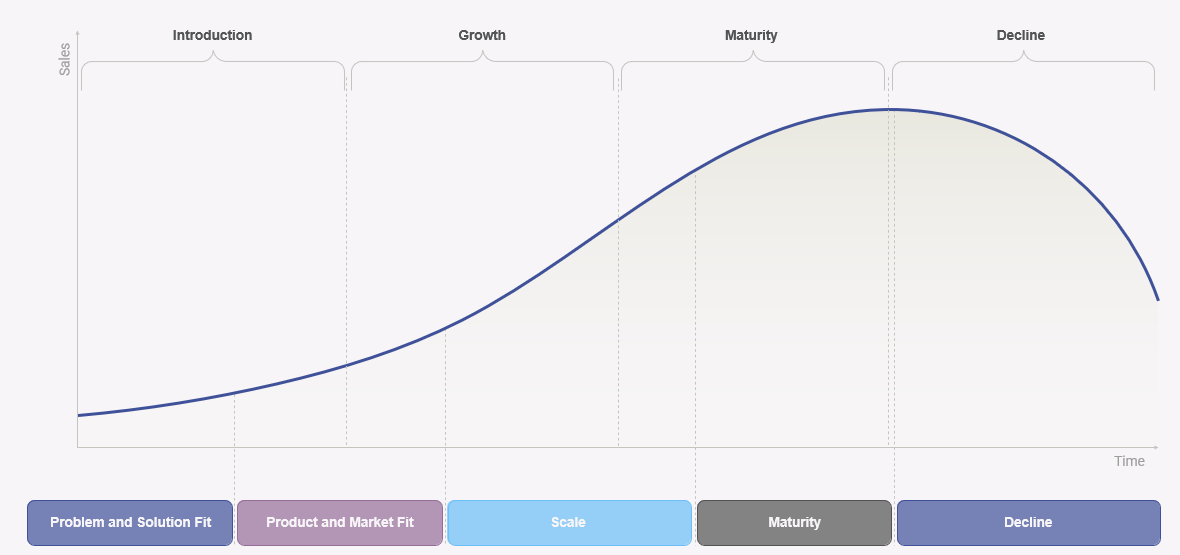
The product life cycle is one of the most well-known concepts in management and, paradoxically, one of the least used to define pricing strategies. The stages of introduction, growth, maturity and decline are frequently discussed, but rarely do these categories end up consistently influencing the company's business policies. Therefore, the result is a catalog where recently launched products, consolidated lines and references about to disappear receive surprisingly similar treatments.
The introduction stage represents a particularly delicate moment because the market is still building a perception about the product. In this phase, the price fulfills multiple functions simultaneously. It can facilitate initial adoption, communicate positioning, reinforce a premium value proposition, or accelerate penetration into certain segments. Therefore, trying to optimize the margin from day one is usually a decision as questionable as trying to recover all the development investment in the first months of marketing.
When the product enters a growth phase, priorities begin to shift. Demand increases, new competitors appear, and the organization has more information to understand customer behavior. It is a time when the pricing strategy must find a balance between capturing value and sustaining the pace of expansion. Acting excessively aggressively can limit growth; Doing so too cautiously may leave on the table a return that the market was willing to recognize.
Maturity introduces a completely different scenario. The product is already known, the market is usually more stabilized and competitive pressures increase. Many companies interpret this stage as an automatic invitation to compete on price. However, that conclusion is usually hasty. Maturity requires a deeper review of the value proposition, differentiation, customer experience and operational efficiencies before starting a price war whose only guaranteed result will be the reduction of margin for all participants.
Finally, the decline appears, perhaps the phase that generates the most resistance. Few decisions are as uncomfortable as accepting that a product has ceased to play the role it had for years. It is common to find references that continue to occupy space in the catalog simply because they were always there, because they still have some historical customers or because eliminating them would imply recognizing that the market has changed. In these cases, the pricing strategy can no longer be analyzed in isolation. It must be part of a much broader decision on portfolio rationalization, technology substitution, or redefinition of offering.
Understanding the life cycle implies accepting that there is no right price for a product permanently. There is a price consistent with the moment that this product is experiencing within the market.
There is one last dimension that tends to appear much less in price conversations, although it is probably one of the most important. For years, there has been discussion about how much they should charge for products without stopping to analyze in sufficient depth how solid their value proposition really is. The question seems uncomfortable because it forces us to look beyond costs and competition. It forces you to ask yourself if the product deserves the price that the organization intends to charge.
Several decades ago, David Garvin proposed a model for evaluating quality that continues to be extraordinarily relevant because it breaks with the idea that quality depends solely on meeting technical specifications. Its approach incorporates dimensions such as performance, reliability, durability, additional features, serviceability, aesthetics, and the perception that the market builds around the product. Together, these elements offer a much more complete view of the value that the customer actually receives.
Two products may have very similar costs and belong to the same category, but offer completely different levels of quality. When that happens, expecting the two to compete exclusively on price is an oversimplification.
The temptation for many organizations is to assume that quality is an obvious attribute and that the market will necessarily recognize it. Experience often shows the opposite. Quality only creates pricing power when the customer is able to perceive it, understand it and assign it a sufficient economic value to justify a price difference. A technically superior product, but unable to communicate that superiority, will end up competing under conditions very similar to those of any standard alternative. It is unfair, but it is so.
That's why Garvin's model is especially useful within a segmentation strategy. It does not intend to give an academic rating to the product or build an internal ranking of quality. Its real contribution is to help identify which references have sufficiently differentiating attributes to sustain value-based pricing strategies and which continue to depend, to a greater extent, on operational efficiency or economic competitiveness to remain current in the market.
Understanding this difference avoids one of the most frequent mistakes in pricing: trying to charge premium prices for products whose value proposition barely manages to distinguish itself from the competition, or, at the opposite extreme, competing through aggressive discounts on products whose quality would allow you to build a much more profitable position.
Before concluding the article, (I know it was very long) it is worth landing an idea that has been present from the beginning and that explains why so many pricing initiatives produce disappointing results.
After going through all these classification criteria, it is clear that none of them aims to answer what the correct price is for a product. That question, by itself, is based on a wrong premise. The real purpose of segmenting a catalog is to understand that each product plays a different role within the business and that, precisely for this reason, it needs a different strategy. ABC analysis helps to understand who sustains profitability. Sales velocity reveals how quickly the market learns about a product. Competitive intensity shows how much room there is to differentiate yourself. The life cycle explains why the same product should not be managed the same throughout its existence. And quality assessment allows you to determine the extent to which perceived value supports a differentiation-based pricing strategy.
Seen in isolation, each of these methodologies provides valuable information. But it's when they combine that they really begin to transform the way an organization makes decisions.
That shift in perspective also changes the type of conversations that happen within the company. The discussion begins to revolve around much more relevant questions such as: Which products really generate the economic value of the business? Which ones should be protected from a price war? In which ones is there room to capture a higher margin? Which references no longer fulfill the role for which they were created? These are questions that are much more difficult to answer, but also much more useful for building a sustainable strategy.
The good news is that today we have tools capable of answering these questions with a level of precision that was unthinkable a few years ago. Advanced analytics, artificial intelligence and optimization models allow you to simultaneously analyze hundreds or thousands of references, identify behavioral patterns, estimate price sensitivity and simulate scenarios before bringing them to market. Technology has greatly reduced the technical complexity of these analyses. What remains imperative is the ability to correctly interpret that information and turn it into decisions that make sense for the business.
At ICX we have seen that the best results appear when technology and consulting work in a complementary way. For this reason, we maintain a strategic alliance with SYMSON, one of the most recognized specialized platforms in pricing optimization and price intelligence, which incorporates advanced analytics and artificial intelligence models to support decision-making. You can learn more about their platform on https://www.symson.com/
Within this alliance, SYMSON provides the technology and analytical capabilities that allow modeling scenarios, identifying optimization opportunities and generating data-driven recommendations. At ICX we complement this technological component with what no platform can replace on its own: the understanding of the business model, commercial strategy, cost structure, competitive positioning and financial objectives of each organization. Our job is to translate the findings of the analysis into decisions that are viable, sustainable, and aligned with the reality of the company.
Because, in the end, a tool can calculate the optimal price for a product, but it cannot decide what role that product should play within the business strategy. That is still a business decision. And that's precisely where good consulting makes a difference.
Perhaps that is the most important conclusion of all. Most companies believe that they need to find better prices, when in reality what they need is to understand their catalog better. Prices are, to a large extent, the consequence of that understanding. If all products are treated equally, the problem was never the percentage of the increase or the formula used to calculate the margin. The problem began much earlier, the day the organization decided that all its products were the same, when the market had been proving exactly the opposite for years.

Iván Arroyo : Jul 28, 2026
Your pricing strategy has already failed if all your products are treated the same

Iván Arroyo : Apr 07, 2026
In quite a few organizations, pricing continues to be treated as an operational consequence rather than a strategic decision.

Iván Arroyo : May 08, 2026
Discussions about prices typically arise in moments of pressure.


