




/ICX_Insights%20content/Folder%20icon%20for%20insights.svg)
/ICX_Insights%20content/Folder%20celeste.svg)
/ICX_Insights%20content/Print%20gris.svg)
/ICX_Insights%20content/Print%20celeste.svg)
/ICX_Insights%20content/Share%20icon.svg)
/ICX_Insights%20content/Share%20celeste.svg)
/ICX_Insights%20content/Subscribe%20icon.svg)
/ICX_Insights%20content/Subscribe%20celeste.svg)
/ICX_Insights%20content/Start%20Here%20icon.svg)
/ICX_Insights%20content/Start%20here%20celeste.svg)
Guide on how to export/import products in Adobe Commerce
Many times it can be inconvenient and time-consuming to manually add a large number of products to a Magento installation.
3 min read
3 min read
Magento 2 includes an intuitive, easy-to-use product manager that allows store administrators to configure and publish new products in just a few minutes. Through a guided interface and preset attribute sets, you can create simple, configurable, virtual, or downloadable products with only a few clicks, completing key fields such as name, SKU, price, tax class, and visibility. This streamlined workflow reduces manual effort, minimizes errors, and enables your team to keep the catalog up to date and aligned with your commercial strategy without requiring advanced technical knowledge.

Button to create new products
We'll see how to create a product in Magento using only the basic attributes required to be visible, added to the cart and sold at your e-commerce store.
List of required product attributes attributes
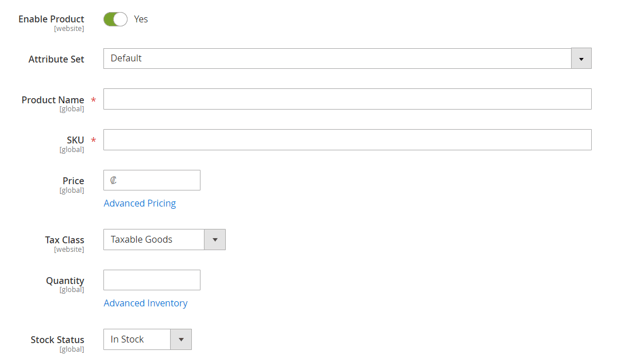
It is also necessary to review some attributes that, although they already have a default value, must be validated and, if required, adjusted to ensure they align with the commercial, operational, and regulatory needs of our store. Leaving these attributes with their original configuration can lead to inconsistencies in how products are displayed, priced, taxed, or indexed in search, and may impact both conversion and catalog management.
These attributes are auto-filled with a predetermined value selected from a predefined list of options, which Magento uses as a starting point for product creation. However, before publishing the product, it is advisable to verify each of these values and confirm that they are appropriate for the specific product type, sales channel, and customer segment you are targeting.
>>Content personalization in Magento Commerce<<
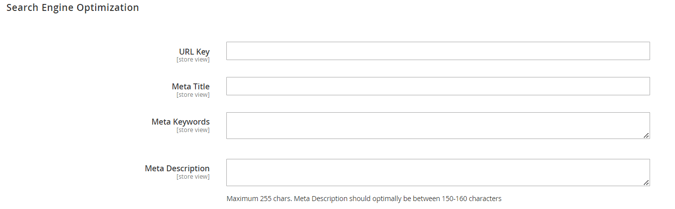
Following this steps with Magento, by clicking a few buttons and completing very little information, it is possible to create a product that is available for sale to the public, being accessible by URL, available in a product search, or displayed in the product listing.
Don't forget to review Magento's other non-required attributes, these provide completeness to your store and offer a better experience for users browsing your site.
In summary, Magento 2 provides a robust yet accessible environment for creating and managing products efficiently. By correctly configuring the required attributes—such as name, SKU, price, tax class, and visibility—and validating the default values of non-required attributes, your team can ensure products are accurately represented, properly taxed and priced, and easily discoverable across the store. This disciplined approach not only reduces operational errors and manual rework, but also strengthens the overall customer experience, helping your e-commerce operation remain consistent, scalable, and aligned with your commercial strategy.

Many times it can be inconvenient and time-consuming to manually add a large number of products to a Magento installation.

 Christopher Liddell : May 29, 2025
Adobe Commerce is an e-Commerce platform with a large and complete number of functionalities, among them is catalog and inventory management, where a...

Christopher Liddell : May 29, 2025
Magento is a robust eCommerce solution that has consolidated itself as one of the industry leaders and is quickly growing in popularity amongst...


